Ourson Display Bold: A Practical Evaluation for Modern Design Projects
In the crowded landscape of digital and print typography, selecting a typeface that balances visual weight with functional clarity is often a complex decision. Designers frequently encounter a trade-off between fonts that are striking but difficult to read, or those that are legible but lack personality. Ourson emerges as a specific solution to this dilemma, positioning itself as a Display Bold font engineered to deliver immediate impact without sacrificing utility. For professionals evaluating resources for headlines, branding, or large-scale signage, understanding where Ourson fits within the broader typographic ecosystem is essential before committing to a design direction.
This evaluation examines the structural characteristics of Ourson, compares its approach to other bold display styles, and outlines the specific scenarios where it offers a distinct advantage. The goal is to provide a clear framework for deciding whether this typeface aligns with your project requirements or if an alternative approach might serve better.
The Structural Identity of Ourson
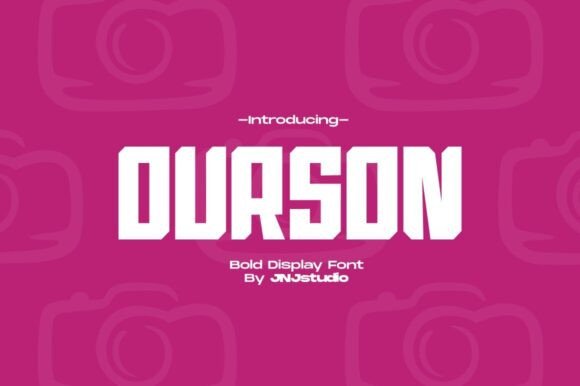
At its core, Ourson is defined by its robust stroke width and geometric precision. Unlike many display fonts that rely on ornamental details or exaggerated serifs to create interest, Ourson achieves its visual power through simplicity and density. The thick, solid lines create a high-contrast presence against negative space, ensuring that the text commands attention instantly. This "heavy" quality is not merely aesthetic; it serves a functional purpose in environments where visibility is paramount.
What distinguishes Ourson from generic heavy sans-serifs is its subtle geometric influence. While the forms are rounded and clean, they retain a slight organic tension that prevents the letters from feeling like rigid mechanical shapes. This nuance allows the font to convey modernity and strength simultaneously. When examining the character set, one notices that despite the boldness, the counters (the enclosed spaces within letters like 'o' or 'e') remain open enough to prevent ink traps in print or pixelation issues on lower-resolution screens. This balance suggests that the designers prioritized versatility alongside impact.
Readability vs. Visual Weight
A common pitfall in choosing bold display fonts is the loss of readability at smaller sizes or in long blocks of text. Ourson mitigates this risk through careful proportioning. The x-height is generous, and the letter spacing is optimized to accommodate the thick strokes without causing the text to appear as a solid block of color. However, it is crucial to recognize that Ourson is fundamentally a display typeface. Its primary strength lies in short bursts of text—headlines, logos, and calls to action—rather than body copy. Evaluating a font's intended scope is a critical step in the selection process, and Ourson clearly signals its role as a headline driver.
Comparative Analysis: Where Ourson Stands
To make an informed decision, it is helpful to position Ourson against the spectrum of available alternatives. In the category of bold, geometric sans-serif display fonts, there are several approaches designers might consider. Some options lean heavily into brutalism, featuring extreme weights and minimal counter space, while others prioritize softness and friendliness over authority.
Comparison with Ultra-Bold Geometrics:
Many ultra-bold fonts sacrifice internal detail for maximum mass. These alternatives can look powerful in large formats but often suffer when scaled down or used in dense layouts. Ourson differentiates itself by maintaining cleaner lines and slightly more open apertures. If a project requires a font that looks aggressive and imposing, a heavier alternative might be suitable. However, if the goal is to communicate strength while retaining a sense of approachability and clarity, Ourson offers a more balanced profile.
Comparison with Humanist Sans-Serifs:
On the opposite end of the spectrum are humanist bold fonts, which feature significant variation in stroke width and organic curves. These are excellent for conveying warmth and tradition but may lack the immediate "pop" required for modern digital interfaces or street-level advertising. Ourson bridges this gap. It lacks the dramatic stroke modulation of humanist fonts, opting instead for a uniform thickness that reads faster and louder. For projects requiring a contemporary, tech-forward, or industrial feel, Ourson's geometric consistency provides a more cohesive look than a variable-stroke alternative.
Evaluating Versatility Across Mediums
Another key factor in comparison is how a font performs across different mediums. Some display fonts are designed specifically for screen use, optimizing for anti-aliasing, while others are tailored for offset printing. Ourson appears to be a hybrid solution. Its clean lines ensure it renders sharply on high-DPI monitors and mobile devices, yet its robust structure ensures it holds up well in physical applications like posters, packaging, and signage. This cross-medium reliability reduces the need for designers to maintain multiple font files for different outputs, streamlining the workflow.
Strategic Use Cases and Trade-offs
Selecting the right typeface involves weighing the benefits against potential limitations. Understanding the specific contexts where Ourson excels—and where it might fall short—is vital for effective design strategy.
When Ourson Is the Right Choice
- Headline Dominance: When a layout requires a single focal point that stops the viewer immediately, Ourson's weight makes it an ideal candidate for main titles.
- Logo Design: Brands seeking to project stability, confidence, and modernity often benefit from the solid geometry of Ourson. It works particularly well for industries such as construction, technology, finance, and sports.
- Short Copy Applications: For posters, billboards, or social media graphics where space is limited and impact is required, the font's ability to stand out at a glance is a significant asset.
- High-Contrast Layouts: Designs utilizing white space effectively can leverage Ourson's dark, heavy forms to create a sophisticated, minimalist aesthetic.
Potential Limitations and Alternatives
Despite its strengths, Ourson is not a universal solution. There are scenarios where its characteristics might hinder rather than help communication.
- Long-Form Text: Using Ourson for paragraphs or articles would likely result in reader fatigue. The high visual density makes extended reading difficult. In these cases, pairing Ourson with a lighter, highly readable serif or sans-serif for body text is a necessary consideration.
- Fine Detail Requirements: If a design relies on intricate details or delicate imagery, the heaviness of Ourson might overpower the surrounding elements. A thinner or medium-weight alternative would allow for better visual hierarchy.
- Traditional or Elegant Themes: Projects requiring a sense of heritage, luxury, or classic elegance might find Ourson too utilitarian. In such contexts, a font with serifs or more traditional proportions would be a better fit.
Decision Factors for Implementation
Before integrating Ourson into a design system, several practical factors should guide the final decision. First, consider the brand voice. Does the message require authority and directness? If so, the bold nature of Ourson aligns well. If the brand voice is playful, whimsical, or understated, this font might feel too dominant.
Second, evaluate the technical constraints of the delivery platform. While Ourson is versatile, extremely small file sizes or low-bandwidth environments might still pose challenges if the font is loaded unnecessarily. Ensuring that the font is only applied where its visual weight adds value is a best practice for performance optimization.
Finally, think about pairing. Because Ourson is so assertive, it demands a complementary partner for secondary text. A neutral, light-weight sans-serif usually provides the best contrast, allowing the headlines to shine without creating visual chaos. Testing these pairings in actual mockups is essential to verify that the hierarchy functions as intended.
Conclusion on Suitability
Ourson represents a thoughtful entry into the display bold category, offering a blend of geometric rigor and functional readability. It is not merely a heavy font but a tool designed for specific communicative goals. For designers comparing options, the decision to use Ourson should hinge on the need for a strong, modern statement that remains legible across various contexts. While it may not suit every project, particularly those requiring subtlety or extensive body text, its capacity to command attention makes it a valuable resource for headlines, logos, and impactful visual communications. By understanding its strengths and limitations, professionals can deploy Ourson effectively, ensuring their designs achieve the desired visual impact without compromising clarity.