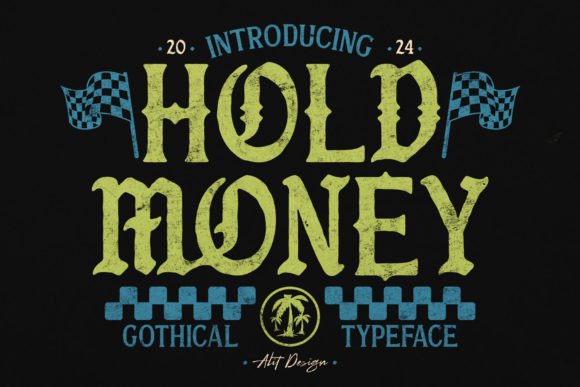
Hold Money: Evaluating a Rugged Blackletter Typeface for Modern Design
In the expansive landscape of digital typography, blackletter fonts occupy a unique niche. Historically associated with medieval manuscripts and early printing presses, these typefaces carry an inherent weight of tradition and authority. However, contemporary design often seeks to reinterpret these classical forms through a modern lens. Hold Money is a bold, rough vintage-inspired blackletter font that attempts to bridge this gap. By blending the structural elegance of Gothic calligraphy with a distressed, worn aesthetic, it offers designers a tool for creating visuals that feel both authentic and edgy. This article explores the characteristics of Hold Money, its practical applications, and the considerations necessary when deciding if it aligns with your specific design goals.
Understanding the Aesthetic Profile
Hold Money is defined by its dual nature. On one hand, it adheres to the fundamental principles of blackletter typography, featuring sharp, intricate strokes and a vertical emphasis that commands attention. On the other hand, it introduces a layer of intentional imperfection. The "distressed" look is not merely a texture overlay but is integrated into the glyph shapes themselves, giving the font a rugged edge. This combination results in a typeface that exudes grit and authenticity, moving away from the pristine cleanliness of standard digital fonts toward something that feels hand-crafted and time-worn.
For designers, this means the font carries immediate visual personality. It does not recede into the background; rather, it asserts presence. The bold weight ensures legibility at larger sizes, while the rough details add depth and character that flat vectors often lack. This makes Hold Money particularly effective for projects where the goal is to evoke a sense of history, rebellion, or raw strength without resorting to cliché vintage tropes.
Strategic Applications and Use Cases
Choosing the right typeface is less about personal preference and more about functional alignment with the project’s message. Hold Money is best suited for display purposes rather than body text. Its intricate details and high contrast can become difficult to read at smaller sizes or in long paragraphs. Therefore, its primary value lies in headlines, logos, and short-form messaging.
- Branding and Logos: For brands in industries such as craft brewing, streetwear, or artisanal goods, Hold Money can communicate a narrative of heritage and craftsmanship. The rugged aesthetic suggests a product that is made with care and has a story behind it.
- Poster and Event Design: In music posters, particularly for genres like rock, metal, or indie folk, the font’s rebellious charm resonates with the cultural tone. It stands out on crowded walls and digital feeds, demanding immediate attention.
- Packaging and Apparel: When applied to t-shirts, labels, or packaging, the distressed look mimics the natural wear of printed materials over time. This adds a layer of perceived value and authenticity, making the design feel established rather than new.
In each of these scenarios, the font serves as a focal point. It works best when paired with ample white space and complementary sans-serif or simple serif typefaces that handle the informational load, allowing Hold Money to perform its decorative and emotional role.
Benefits and Tradeoffs
Like any design tool, Hold Money comes with specific advantages and limitations. Understanding these tradeoffs is crucial for effective implementation.
Benefits:
- Immediate Impact: The bold structure and unique texture ensure that designs using this font are memorable. It cuts through visual noise effectively.
- Versatility within Niche: While specifically styled, it can adapt to various themes ranging from old-world elegance to modern urban grit, depending on the surrounding design elements.
- Authenticity: The worn look reduces the need for additional texturing effects in post-production, streamlining the workflow for designers seeking a vintage aesthetic.
Tradeoffs:
- Legibility Constraints: The complex strokes and distressed edges can hinder readability, especially for audiences unfamiliar with blackletter forms. It is not suitable for instructional text or dense information.
- Context Sensitivity: The strong personality of the font can clash with corporate, minimalist, or high-tech brand identities. It requires a specific tonal match to feel appropriate.
- Overuse Risk: Because the font is so distinctive, using it excessively can lead to visual fatigue. It is most effective when used sparingly as an accent.
Decision-Making Insights
When evaluating whether Hold Money is the right choice for your project, consider the core message you intend to convey. If your goal is to project stability, clarity, and neutrality, a clean sans-serif may be a better alternative. However, if your objective is to evoke emotion, tradition, or a sense of rugged individualism, Hold Money offers a compelling solution.
It is also important to consider the medium. In digital environments, screen resolution can affect how the distressed details render. Testing the font at various sizes and on different devices is essential to ensure the "rough sophistication" translates well without appearing pixelated or muddy. For print projects, the quality of the paper and printing method will interact with the font’s texture. High-quality stock can enhance the premium feel, while rougher papers may complement the distressed aesthetic naturally.
Furthermore, think about your target audience. Demographics that appreciate vintage aesthetics, artisanal quality, or counter-culture themes are likely to respond positively to Hold Money. Conversely, audiences seeking modern minimalism or corporate professionalism may find the style distracting or outdated.
Alternatives and Considerations
If Hold Money feels too aggressive or textured for your needs, there are alternatives worth exploring. Cleaner blackletter fonts offer the same historical reference without the distressed edge, providing a more refined and formal look. Alternatively, modern serif fonts with high contrast can deliver elegance and strength without the Gothic association. For a rugged feel without the historical baggage, distressed sans-serif fonts might provide a more contemporary interpretation of grit.
Ultimately, the decision should hinge on the specific narrative of your design. Hold Money is a powerful tool for those seeking to make a statement. It is not a passive element but an active participant in the visual conversation. By understanding its strengths and limitations, designers can leverage its unique character to create work that is both visually striking and contextually appropriate.
In conclusion, Hold Money represents a thoughtful fusion of traditional blackletter structure and modern distressed aesthetics. It is ideal for projects that require a strong visual identity rooted in authenticity and strength. By carefully considering its application, legibility, and audience fit, designers can unlock its potential to add unmistakable character to their work. Whether for a bold headline or a distinctive logo, this typeface offers a timeless yet edgy solution for those willing to embrace its rugged charm.