Evaluating Angenia: A Modern Serif for Contemporary Design
In the evolving landscape of digital and print typography, designers constantly seek typefaces that balance aesthetic appeal with functional versatility. Angenia has emerged as a notable option within this space, offering a casual serif structure that diverges from traditional, rigid classifications. As a modern serif font, it presents a unique stylistic proposition for projects requiring a blend of elegance and approachability. This evaluation examines the characteristics of Angenia, its practical applications, and the considerations necessary to determine if it aligns with specific design goals.
Understanding the Design Philosophy of Angenia
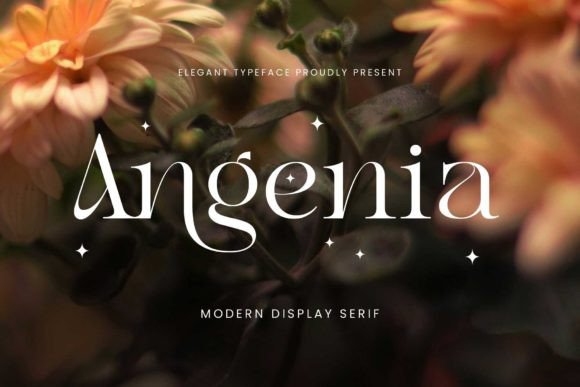
At its core, Angenia is defined by its slender form and minimalist serif details. Unlike heavy, blocky serifs often associated with formal editorial work, Angenia adopts a lighter weight that allows for seamless integration into various layout elements. The font's classification as a "casual serif" suggests a departure from strict academic or legalistic typography, moving instead toward a more fluid and fashionable expression. This design choice makes it particularly effective for titles, sub-headings, and even body text where readability must not be sacrificed for style.
The visual identity of Angenia is further enriched by its extensive character set. It includes dozens of ligatures and alternate characters, which are crucial for adding personality to typographic compositions. These features allow designers to customize the look of words, creating unique combinations that prevent the text from appearing generic. For instance, in branding contexts, these alternates can be used to create distinctive logo marks or to emphasize specific keywords within a headline. The presence of such detailed ornamentation distinguishes Angenia from standard web fonts, offering a layer of depth that can elevate a simple text block into a focal point of a design.
Key Benefits for Diverse Applications
The primary advantage of utilizing Angenia lies in its adaptability across multiple industries. Its clean lines and modern aesthetic make it a strong candidate for the fashion sector, where trends often favor sleek, understated elegance. In wedding stationery, the font's romantic yet contemporary feel provides an ideal backdrop for invitations and save-the-date cards, striking a balance between tradition and modernity. Furthermore, its application extends to editorial magazines, where it can serve as a sophisticated display font for feature articles or as a refined body type for lifestyle content.
Branding and Logo Design represent another area where Angenia excels. The font's ability to pair well with other styles—such as sans serif, cursive, or signature scripts—enhances its utility in creating comprehensive brand identities. A designer might use Angenia for the primary brand name while pairing it with a geometric sans serif for supporting information, creating a dynamic contrast that captures attention without causing visual clutter. The slender nature of the glyphs ensures that the font remains legible even at smaller sizes, making it suitable for packaging labels or business cards where space is limited.
Additionally, the inclusion of alternate characters offers a significant benefit for creative freedom. Designers are not restricted to a single presentation of a letter; they can experiment with different forms to match the mood of the project. This flexibility is particularly valuable in card design and promotional materials, where uniqueness is often a key selling point. By leveraging these built-in variations, creators can ensure their work stands out in a crowded market without needing to manually modify vector shapes.
Considerations and Tradeoffs
While Angenia offers distinct advantages, potential users should also consider its limitations before committing to it for a project. The slender form, while aesthetically pleasing, may present challenges in high-contrast environments or when printed on low-quality paper. Very thin strokes can sometimes lose definition during the printing process, leading to gaps or broken letters. Therefore, it is essential to test the font in the intended medium, especially for large-scale prints or outdoor signage, where visibility is paramount.
Furthermore, the "casual" nature of the font implies a certain level of informality. While this is beneficial for weddings, fashion, and lifestyle brands, it may not be appropriate for contexts requiring absolute authority or neutrality, such as financial reports, medical documentation, or government publications. In these scenarios, a more robust and traditional serif or a neutral sans serif might convey the necessary seriousness. Designers must evaluate whether the playful or artistic undertones of Angenia align with the message they wish to communicate.
Another consideration involves readability in long-form body text. Although Angenia is described as suitable for body copy, its decorative elements and varied stroke widths can cause eye strain if used for extensive paragraphs on screens with lower resolution. It is generally safer to reserve Angenia for headings, pull quotes, and short blocks of text, using a simpler font for the main narrative content to maintain optimal reading flow.
Situational Fit and Alternatives
Angenia is a strong fit for projects that prioritize visual flair and emotional connection. It works exceptionally well in:
- Fashion and Beauty Campaigns: Where elegance and trendiness are central themes.
- Wedding and Event Invitations: Requiring a touch of personalization and romance.
- Lifestyle Editorial: Magazine covers and feature headers that need to grab attention.
- Personal Branding: Logos and social media graphics for creatives, influencers, and boutiques.
Conversely, alternatives may be worth considering in situations demanding maximum legibility or strict adherence to corporate standards. If a project requires a font that is universally accessible and devoid of stylistic distraction, a classic humanist sans serif or a standard transitional serif might be a better choice. Additionally, for technical interfaces or data-heavy dashboards, the decorative ligatures of Angenia could introduce unnecessary complexity, making a utilitarian monospaced or geometric font a more pragmatic selection.
Practical Decision-Making Insights
When deciding whether to integrate Angenia into a workflow, designers should first assess the hierarchy of their project. Does the design require a statement piece that draws the eye immediately? If so, Angenia's unique ligatures and modern silhouette can serve that purpose effectively. However, if the priority is rapid information consumption, the font's decorative qualities might hinder rather than help.
Testing is a critical step in the evaluation process. Before finalizing a design, it is advisable to mock up the font in various sizes and weights to observe how it performs under different conditions. Pay particular attention to how the alternate characters interact with the surrounding text and whether the slender strokes hold up against the chosen background color. Pairing experiments are also vital; try combining Angenia with a few different sans serif and script fonts to see which combination creates the most harmonious balance.
Ultimately, the decision to use Angenia should be driven by the specific needs of the audience and the context of the message. It is a tool that adds beauty and distinction to designs, but like any specialized instrument, its value depends on how appropriately it is applied. By weighing its aesthetic strengths against its functional constraints, designers can make informed choices that enhance their creative output without compromising clarity or usability.